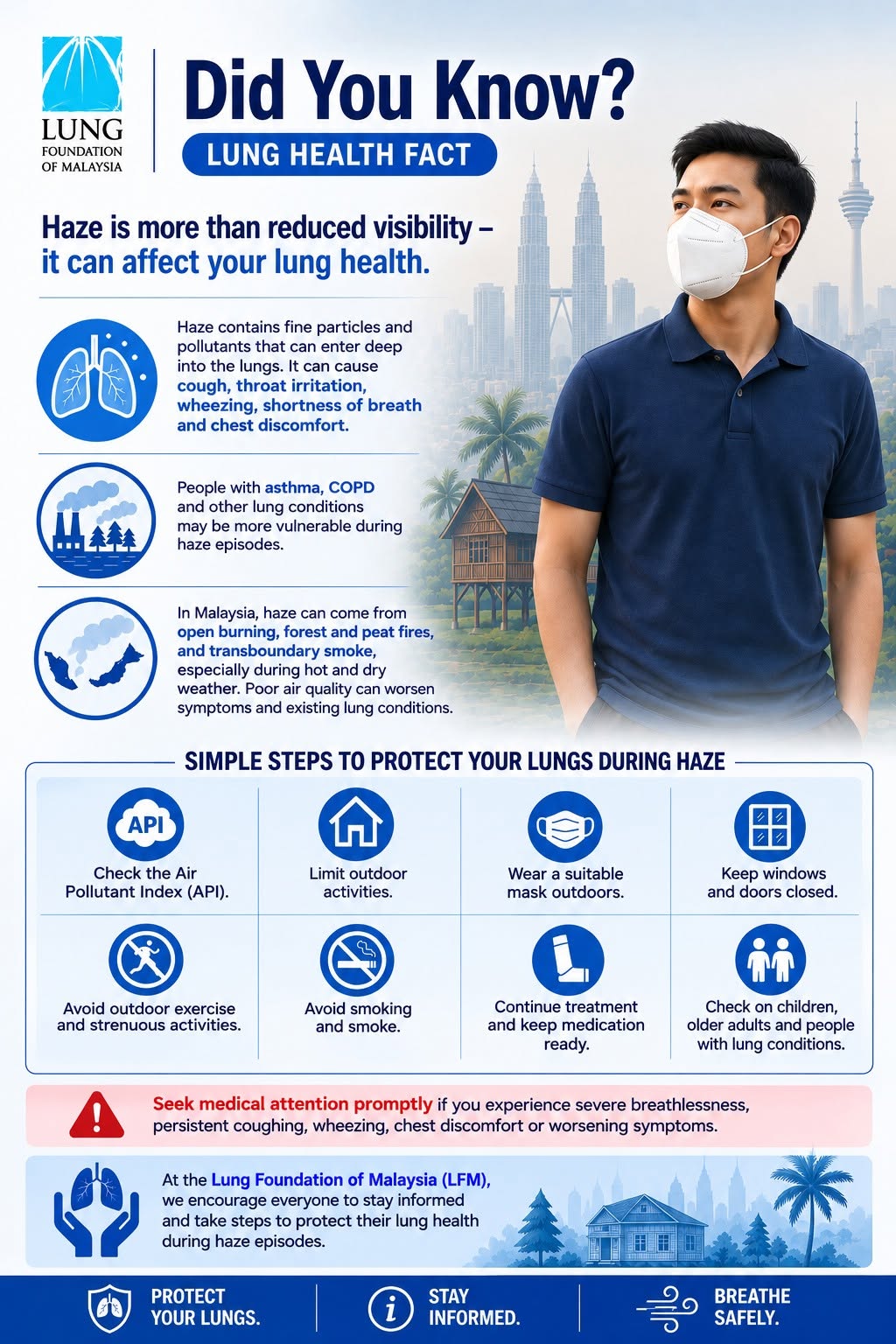
Haze is more than just reduced visibility — it can have a significant impact on our lung health.
Haze contains fine particles and other pollutants that can enter deep into the respiratory system. Exposure can irritate the airways and may cause symptoms such as coughing, throat irritation, wheezing, shortness of breath and chest discomfort. People living with asthma, chronic obstructive pulmonary disease (COPD), and other lung conditions may be particularly vulnerable during haze episodes.
In Malaysia, haze can occur periodically due to open burning, forest and peat fires, and transboundary smoke, particularly during hot and dry weather conditions. Poor air quality during haze episodes can increase the risk of respiratory symptoms and make existing lung conditions more difficult to manage.
Simple steps to protect your lungs during haze: • Check the Air Pollutant Index (API) before spending time outdoors • Limit outdoor activities when air quality is unhealthy • Wear a suitable mask when outdoor exposure is unavoidable • Keep windows and doors closed when outdoor air quality is poor • Avoid outdoor exercise and strenuous activities during haze episodes • Avoid smoking and exposure to cigarette smoke • If you have asthma, COPD or another lung condition, continue your prescribed treatment and keep your medication readily available • Check on children, older adults and individuals with existing lung conditions
If you experience severe breathlessness, persistent coughing, wheezing, chest discomfort or worsening respiratory symptoms, seek medical attention promptly.
At the Lung Foundation of Malaysia (LFM), we encourage everyone to stay informed and take proactive steps to protect their lung health, especially during haze episodes.
Protect your lungs. Stay informed. Breathe safely.
Prevention is better than cure. Start with your daily routine — your body will thank you.